

In this next post in our series, we talk about faxing. It's apparently been around since 1964, and, stepping back for a moment, it's absolutely unbelievable that over 50 years later, much of the Canadian medical community still communicates largely by fax.
Read moreHow does your doctor get compensated?

Credit: Luis Llerena
A question occasionally arises as to how Magenta Health physicians are compensated by OHIP for the medical care that they provide.
Read more#TUESDAYTECHTIPS - Size isn't Everything with Computer Monitors - Korean IPS Monitors

If you spend all day staring at a monitor, we strongly believe that it’s worth getting one suitable for your needs. Chefs take care of their knives, surgeons have fancy spider robots, family doctors - we probably use a computer more than any other tool.
Read moreWhy Doctors are Late - The Top 3 Reasons
One of the most common frustrations for patients is when their doctor is late for an appointment. This is something that we try to minimize as much as possible, but unfortunately, we don't have a way to entirely eliminate this problem.
Nevertheless, we're believers in being transparent when it comes to issues such as this. If we can't fully solve the problem, at least we can try to communicate why this is happening, and what we're doing to minimize this problem.
Read moreAddressing Barriers to Health Care with Technology
The relationship between our technology use and patient communication policies, and our ability to care for patients who have limited access to technology is a thorny issue. Providing accessible health care is one of our priorities, so our use of technology is something that we grappled with at length prior to proceeding as we have.
Read more#TUESDAYTECHTIPS - How to connect to @voipms using @CounterPath, @Obihai, or @GrandstreamNet technology

Credit: Wilfred Iven
To follow up on last week's post discussing phone systems and VoIP generally, the obvious question is what physical technology is needed to use a feature-rich VoIP provider such as voip.ms
Read moreThe Start of a Series - #TuesdayTechTips - Phone Systems & VoIP

As a technology focused clinic, we're oftentimes asked by other small businesses and start-ups for technology related recommendations. Sometimes it's health care related; sometimes it's not.
This is the start of #TuesdayTechTips - a series of weekly (*hopefully) posts where we'll share our research and experiences.
Read moreShould I get a Shingles shot? ...it depends...

From Stocksnap
Over the past week, several of my middle age and elderly patients have requested prescriptions for a Shingles vaccine (Zostavax). There is a lot of marketing (complete with fiery burning barbed wire around a body) about the vaccine so I think it is important to understand the limitations of the vaccine before proceeding.
Read moreWhy do we ask patients for their OHIP number?
We're occasionally asked why we request OHIP numbers as part of our online registration process.
As physicians at Magenta Health are family doctors who provide ongoing, long-term primary care for enrolled patients, they are unable to enroll patients who do not have valid OHIP coverage; this includes patients who are only covered by another provincial health plan, or by third-party insurance. (read more here).
We therefore ask patients to supply their OHIP number upfront, as part of the initial online registration process, so that we can validate and confirm this information with the Ontario Government. This step usually takes a couple days, but it prevents the situation of patients taking time out of their busy day to come to the clinic, only to find out once they arrive that their OHIP has expired or is otherwise invalid, and that they will not be able to complete their appointment with a physician.
The Toronto Health Tech Ecosystem
One of the advantages of living and working in downtown Toronto is the vibrancy of its technology start-up ecosystem. Everywhere we turn, it feels like we bump into a different start-up working to improve some aspect of our day-to-day lives, particular in health-care.
Read moreMelanoma is as easy as ABCDE
Warmer weather is just around the corner, and so should our vigilance for sun protection and skin cancer. There are several types of skin cancers, but malignant melanoma is the most fatal form of them all as it can invade through the skin and spread throughout the body. Fortunately though, early detection results in a high cure rate (about 90%), which is why we will go over the ABCDEs of melanomas.
Read moreSecuring Communications using HTTPS

Source: Luis Llerena
Bullying in Toronto Schools: A Worrisome Trend

This image was created by 18-year-old Mary Anne Marcondes. Visit her site for more of her work and her series on bullying.
A Toronto Public Health Survey of 6,053 Grade 7-12 students across Toronto’s four public boards showed that 20% or 1 in 5 students reported having being bullied in the 2014 school year. This number is of public health concern, as bullying can lead to long-term negative emotional and physical consequences.
Read moreWhat languages are spoken at Magenta Health?
Having the ability to clearly communicate with your family doctor is critical. Here's how our approach to helping patients who don't necessarily speak English fluently.
Read morePit Stop

Check out what our architects have been up to! Their design “Pit Stop” won an OAA (Ontario Association of Architects) award for a transit facility in the Town of Oakville. Check out their other work here. Elementary schools have never been this stylish. Congratulations Bortolotto!
Why it’s important to have a family doctor

Photo by Alicja Colon
We’re often asked, “If I’m healthy, why do I need a family doctor?”
Most people recognize the critical role a family doctor plays in the management of ongoing medical conditions (like high blood pressure or diabetes), but it can be difficult for fit and healthy people to understand the importance of having a family physician, especially if they are rarely sick or have no family history of major illnesses. However, it’s vital to remember that your family doctor’s job goes far beyond treating you when you’re not feeling well.
Most important is the continuity of care that is unavailable at walk-in clinics or the emergency room. Put simply, if your doctor knows what’s normal for you, they’re better equipped to determine what’s not normal for you. An established relationship means you’re not rehashing the same details each time you make an appointment and your doctor will be there to follow up with you on an ongoing basis to ensure everything is proceeding as normal. Follow-ups at walk-in clinics or the emergency room often require the patient to recount their medical history for a new doctor that is unfamiliar with their case or concerns.
An emergency room doctor or a physician at a walk-in clinic is also at a disadvantage because they don’t know you on a personal level and therefore may not be able to offer you advice or recommendations that mesh with your lifestyle. A family doctor treats the patient as a whole, not just their physical symptoms. Care can be provided that takes into account a patient’s physical, psychosocial, and emotional well-being, and offers care and recommendations that are tailored to you, your lifestyle and your values.
Whether a patient is young or old, a family doctor’s best tool is preventative medicine, which is rarely discussed during visits to the emergency room or walk-in clinics. This is because although preventative health recommendations are of vital importance, they are hardly the most pressing or urgent of concerns when a patient seeks medical help from an emergency care provider. Family doctors are the primary resource for preventative health care and can help prevent problems before they occur.
Your family doctor can be a trusted health adviser who plays an important role in your physical, emotional, and mental health, so it's important that everyone finds a family doctor that they feel comfortable working with and can rely on for care in the long-term.
We're on TV!

Health Reporter Pauline Chan of @CTV News shared our vision of a modern doctor’s office this week. We shared with her our online booking system developed in partnership with Veribook and supported by @infoway ‘s #ebooking initiative, our new project “Chime” that started with @hackinghealthca, as well as our focus on online communication between patients and doctors. Check out the clip!
Sexting: What Parents Need to Know

Sexting generally refers to the sending of sexual images/comments via text message. It can be a part of normal, healthy adolescent sexual exploration and development (1). Quite often it is actually being used in place of having sex as a way to initiate romantic relationships. 11% of Grade 10 students with cell phones and 14% of Grade 11 students with cell phones say they have sent a “sext”. (2)
Unfortunately, in some cases, these images have been widely distributed and are meeting the definition of Child Porongraphy. The federal cyberbullying act, Bill C-13, came into force on March 9th, 2015 and makes it a criminal offence (up to five years in prison) for people aged 12 and older to share “intimate images” of anyone without their consent. Child pornography charges may also still be applicable to anyone under 18 who sends and receives images of another minor.
Ontario’s new sex-ed curriculum to be rolled out in September 2015 is aiming to address this issue early, starting in Grades 4,5 and 6, although parents also undoubtedly play a crucial ongoing role in helping ensure safe and healthy sexual practices and development in teens. To aid in these sometimes difficult discussions, here are some considerations to raise and harm reduction tips to share:
Once you send images of yourself online what happens to them can be out of your control - It is probably best not to send them at all.
Your image may be shared, or a trusted person’s computer may be stolen or hacked
Relationships can end and feelings can change
If you do decide to share pictures with a trusted partner, remember:
If you are under 18 it may be illegal
Only send pictures to someone you trust, who cares and respects you
Agree how to stay safe with your partner: do not have distinguishing features (your face, tattoos, your bedroom) in the picture
Avoid drinking and sexting
What if someone shares your child’s picture without consent? Needhelpnow.ca is a Canadian website with instructions on how to get your picture removed from social media. It also has a support line and reporting resources for both youth and parents.
For clinicians wanting to learn more about Adolescent Sexual Health, Magenta’s Dr. Aarti Kapoor is presenting on this topic at Toronto’s annual Primary Care Today Conference May 9, 2015.
For patients, if you have more questions, feel free to talk to your Magenta Health family doctor. Click here to register as a new patient.
*reproduced from “Adolescent Sexual and Mental Health Toolkit for Clinical Trainees” by Dr. Aarti Kapoor
(1) Ybarra, M. & Mitchell, K. (2014) "Sexting" and Its Relation to Sexual Activity and Sexual Risk Behavior in a National Survey of Adolescents: Journal of Adolescent Health, 55: 757-764.
(2) Young Canadian in a Wired World: Phase III study. The Trends and Recommendations, 2015
Space available for local health practitioners off hours
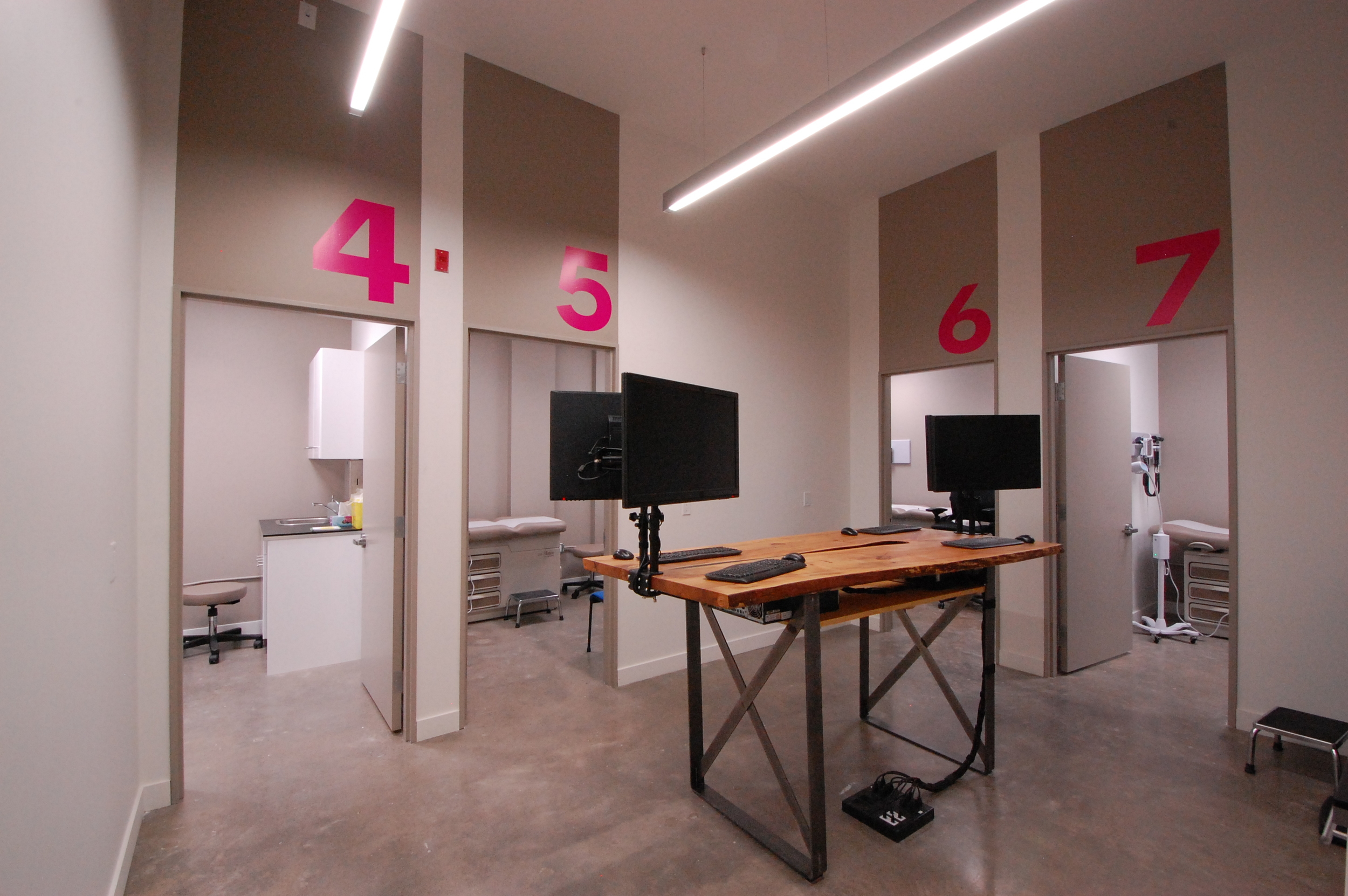
As family doctors, we are of the belief that other health practitioners such as counsellors, therapists, and registered dietitians play an important role in the health of our patients and the community at large.
At the same time, it’s sometimes very difficult for such practitioners to find suitable and affordable clinic space to see patients. This lack of space makes it harder for our patients to find affordable health care options, and more generally, negatively impacts the health of our community.
Magenta Health is therefore happy to offer subsidized & managed exam room space to local health practitioners to see patients at our clinic when we’re not at capacity. This is usually outside regular business hours (e.g. when we’re having our after-hours clinics), but we also have space during business hours a couple days a week.
There’s no long-term commitment, we charge a flat rate per hour, there’s no obligation to refer or otherwise affiliate with us, and practitioners simply book rooms online at their own convenience.
If you or someone you know would be interested in this offer, please contact us at contact@magentahealth.ca.
Measuring how much sleep you really need

Photo by Charlie Hang
As a follow up to last week’s post on sleep hygiene, it’s also worth considering how many hours of sleep your body typically needs. This information can help you set ideal bedtimes and realistic plans on when to get up.
The National Sleep Foundation recently came out with some general recommendations based on age groups. Find a summary here and the detailed article here. As you can see from the summary, requirements will vary from person to person. It will also likely vary depending on the exertion level from your day’s activities and your quality of rest over the past several days. Sleep requirements also appear to decrease as you age. Teenagers can easily sleep ten hours while patients in their 70s or above frequently report less than seven hours of sleep.
The range of recommended durations can be wide even in the same age bracket. You can however estimate your own personal needs - it’s easy to do on your own and requires no special equipment. The steps that I personally recommend are as follows:
- Find a ~2 week block of time when you have good control of your bedtime and when you can wake up. This is probably the hardest part.
- Set an arbitrary bedtime for that 2 week block.
- Let your body wake up when it chooses to. No alarms.
- Record when you wake up over the 2 weeks.
- Assuming no major changes in your life over that 2 week span, the average number of hours you sleep in the last few days of your 2 week block is probably a rough estimate of your requirements.
Hopefully the combination of better sleep hygiene and an understanding of how much sleep you actually need forms a good foundation for getting a decent night’s rest. As always, if you have more questions, feel free to talk to your Magenta Health family doctor.