

Credit: Vitaly Gariev
If you've had bloodwork, an X-ray, an ultrasound, or another medical test done, you're probably wondering where to find your results.
You might also expect to find all your health information in one place. Unfortunately, Ontario doesn't currently have one centralized place where patients can access all their medical information.
Your records may be spread across different hospitals, laboratories, imaging centres, and healthcare providers, and information doesn't always reach everyone who needs it.
At Magenta Health, we're working hard to improve how health information is shared and address the gaps we can control. But there are also many parts of the healthcare system outside your family doctor's control. You can read more about missing medical information and our work to close the loop here.
In the meantime, patients play an important role in keeping their care connected. Following up on test results and making sure you understand what they mean and what to do next can help fill gaps between different parts of the healthcare system.
Where you can find your results depends on what kind of test you had, where you had it done, and which organization performed it. There are nuances and exceptions depending on the situation, but this guide provides a general starting point for where to look for your results and what to do if you can't find them.
WHERE CAN I FIND MY TEST RESULTS?
You can find your test results in a few common places, depending on where it was performed.
| Where you had your test | Where to look for your results |
|---|---|
| Hospital | The hospital's patient portal, often MyChart |
| LifeLabs | LifeLabs' patient portal |
| Dynacare | Dynacare's patient portal |
| Community imaging centre | Contact the imaging centre directly |
| Other laboratory or testing facility | Contact the facility directly to ask how to access your results |
Different healthcare organizations use different systems, and not every result will appear in every portal. For example, bloodwork done at a hospital may not appear in the same portal as bloodwork done at a community laboratory. If you're unsure where to look, start by contacting the organization that performed your test.
-
Many hospitals in Ontario use MyChart, a patient portal that allows you to access certain parts of your health record online.
If you have care at a hospital that uses MyChart, you may be able to find things like lab results, imaging reports, hospital visit information, and other parts of your health record there.
Some hospitals in the Greater Toronto Area use MyChart, including:
Other hospitals have their own patient portals. For example, University Health Network uses myUHN, while Women's College Hospital uses myHealthRecord.
If you receive care at more than one hospital, you may be able to access information from multiple participating organizations through a single MyChart account.
However, what information is available and how quickly it appears can vary between hospitals. Some results may be available within days, while others can take longer.
If you're not sure whether the hospital where you received care uses MyChart, check the hospital's website or ask when you register or check in.
➤ Please note: Not every hospital uses MyChart. Smaller hospitals and hospitals in rural areas may use different systems, so you may need to contact the hospital directly to learn how to access your records.
-
If you had bloodwork or other laboratory testing done at a community laboratory, your results may be available through the laboratory's own patient portal.
For example, LifeLabs and Dynacare provide online portals where patients can access certain laboratory results.
Community laboratory testing results may be available through the lab's patient portal once they’re processed, but not every test is processed by the lab where your sample was collected. Some samples may be sent to another organization, such as Public Health Ontario (PHO), for analysis.
Public Health Ontario doesn't provide lab results directly to individual patients. Instead, results are sent to the healthcare provider who ordered the test or to the local public health unit, depending on the circumstances. Some results may also be available through MyChart via Ontario's provincial laboratory information system (OLIS).
If you can't find a result in your lab portal, contact the laboratory or the healthcare provider who ordered the test. They can help you determine where the test was processed, where the results were sent, and how to access them.
-
Imaging tests help healthcare providers look inside the body to investigate symptoms, diagnose conditions, or monitor changes. They include:
X-rays
Ultrasounds
CT scans
MRIs
Other diagnostic imaging
If you had imaging done at a hospital, the report may be available through that hospital's patient portal, like MyChart.
If you had imaging done at a community imaging centre (i.e., not a hospital), there may not be a centralized online portal to access your results. Different organizations operate community imaging centres, so you'll generally need to contact the location where you had the test to ask how to access your report or images.
Some imaging facilities use PocketHealth, which allows you to access your imaging records online. Check with the imaging facility directly to see whether this option is available.
Your physician may receive the radiologist's report: a written interpretation of the images by a doctor who specializes in interpreting medical imaging. The report describes what the radiologist observed and may include findings relevant to your care. However, your physician does not have access to the actual images.
If you'd like a copy of your images, you will need to request them directly from the imaging facility.
WHAT IF MY DOCTOR ORDERED THE TEST?
If your Magenta Health physician ordered your test, they should receive the results once the test is completed and processed.
However, health information doesn't always move through the healthcare system as neatly as we might expect.
If another physician or healthcare provider ordered the test, your Magenta Health physician may or may not receive the results. This can depend on who ordered the test, where it was performed, and whether your physician was included as a recipient of the report.
If a specialist ordered the test, it's generally best to follow up with that specialist about the results. Similarly, if your physician referred you to a specialist, they may receive information from the specialist, but this isn't guaranteed.
If you're waiting to hear about a test result and aren't sure whether your physician received it, you can submit a follow-up request through our site.
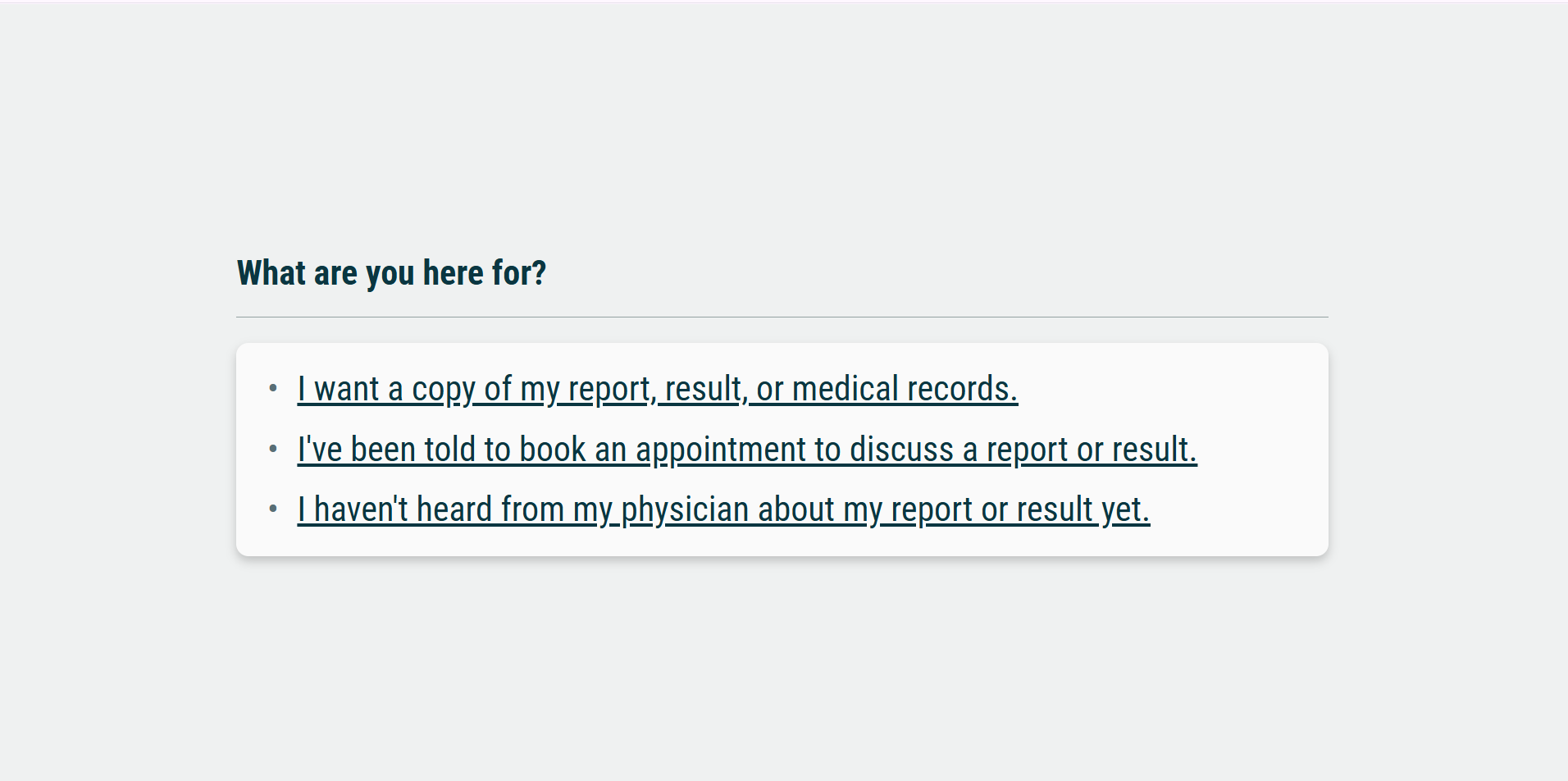
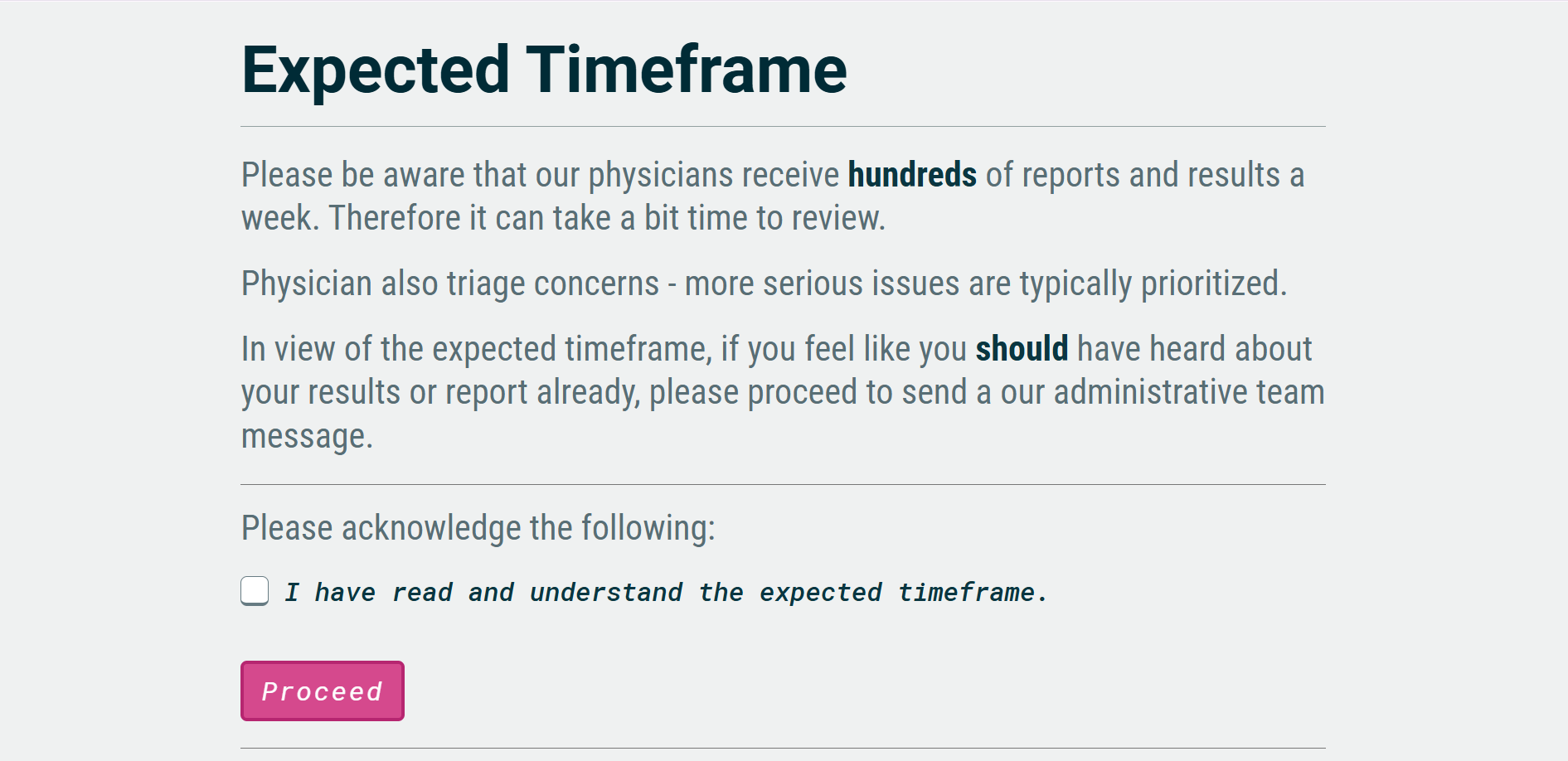
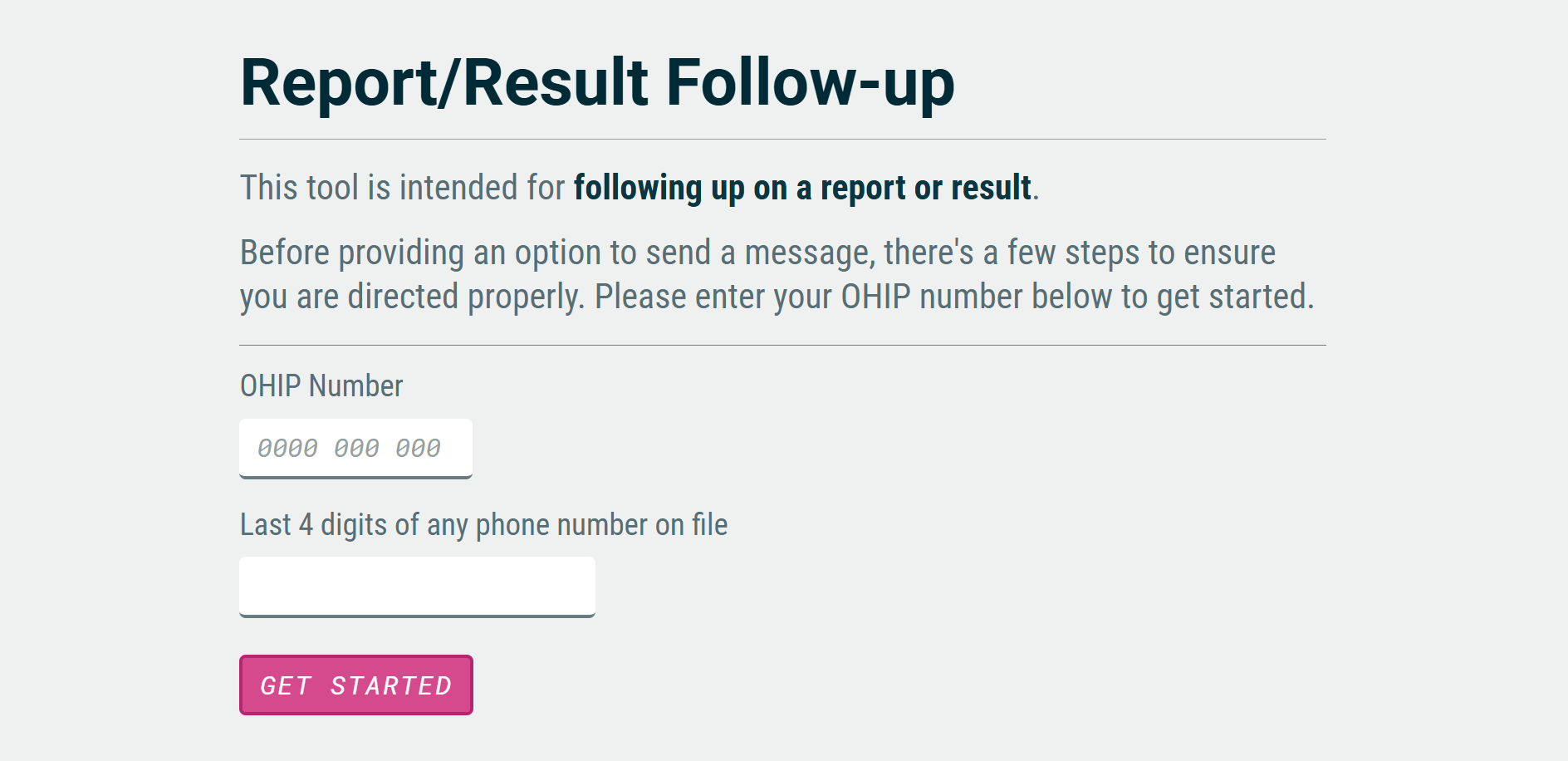
Here's how:
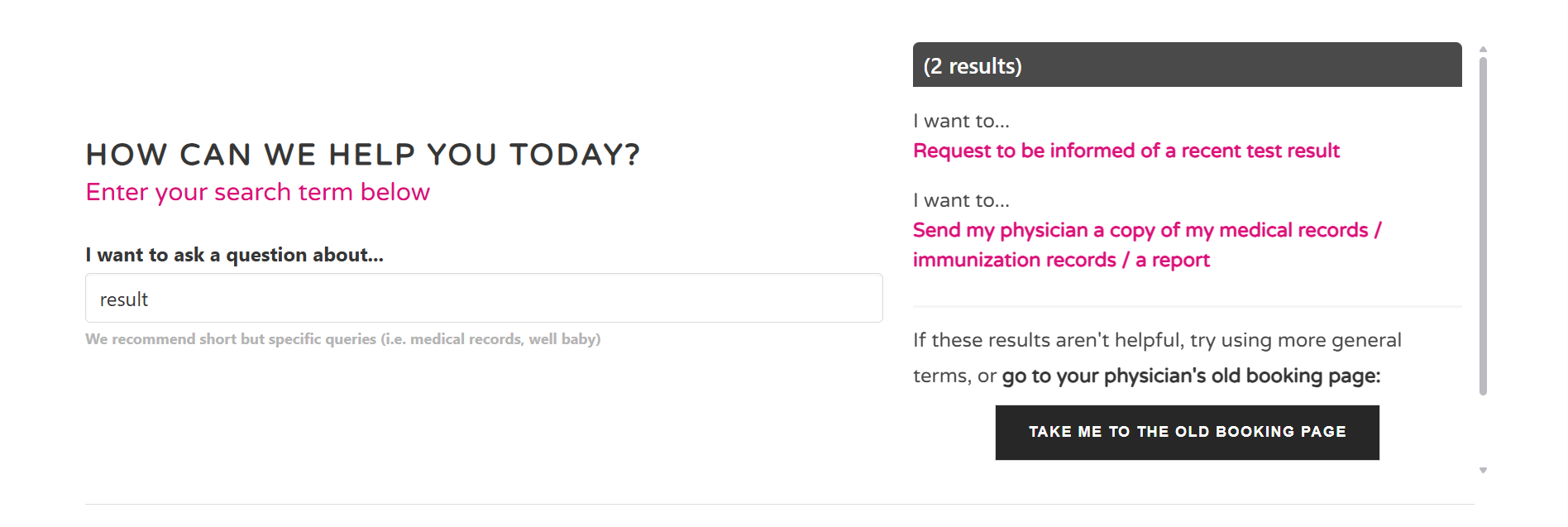
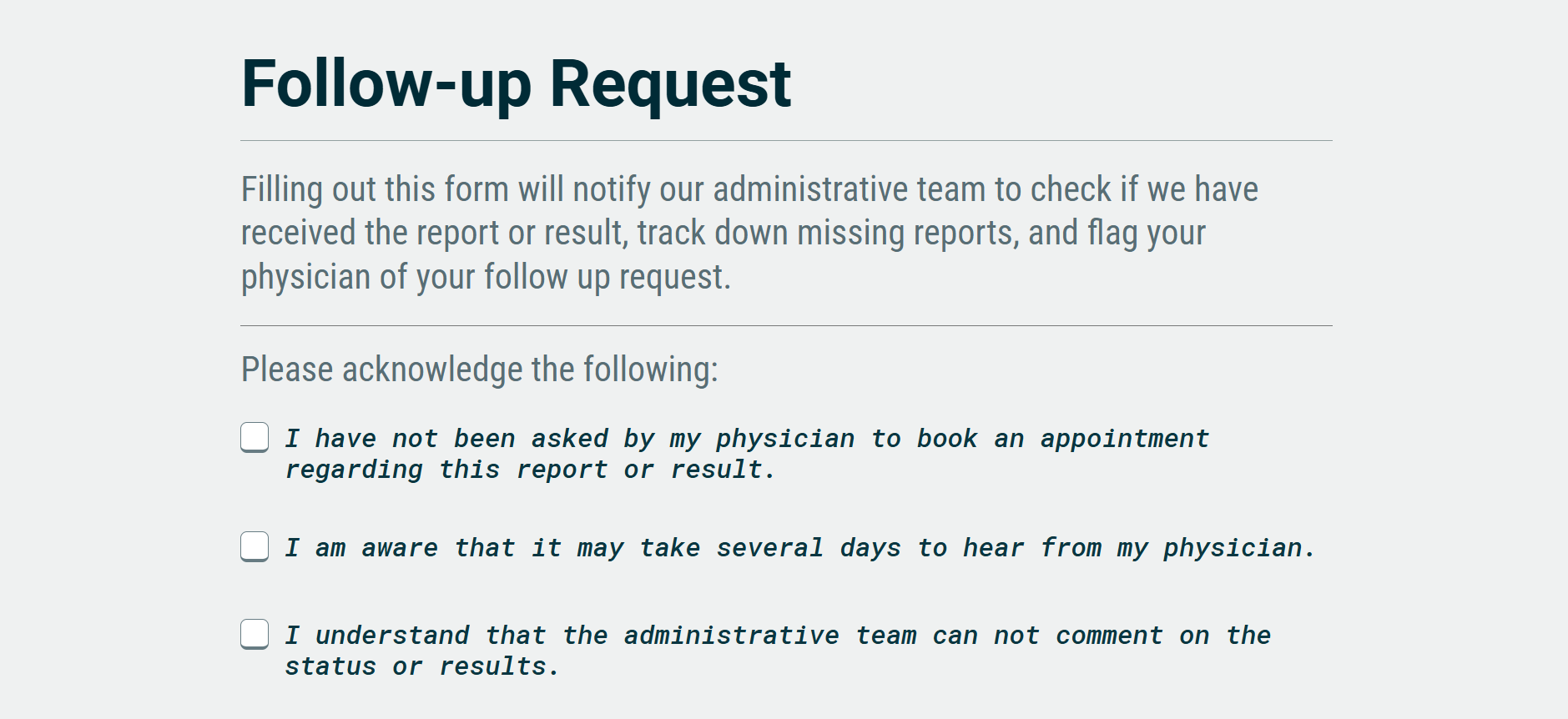
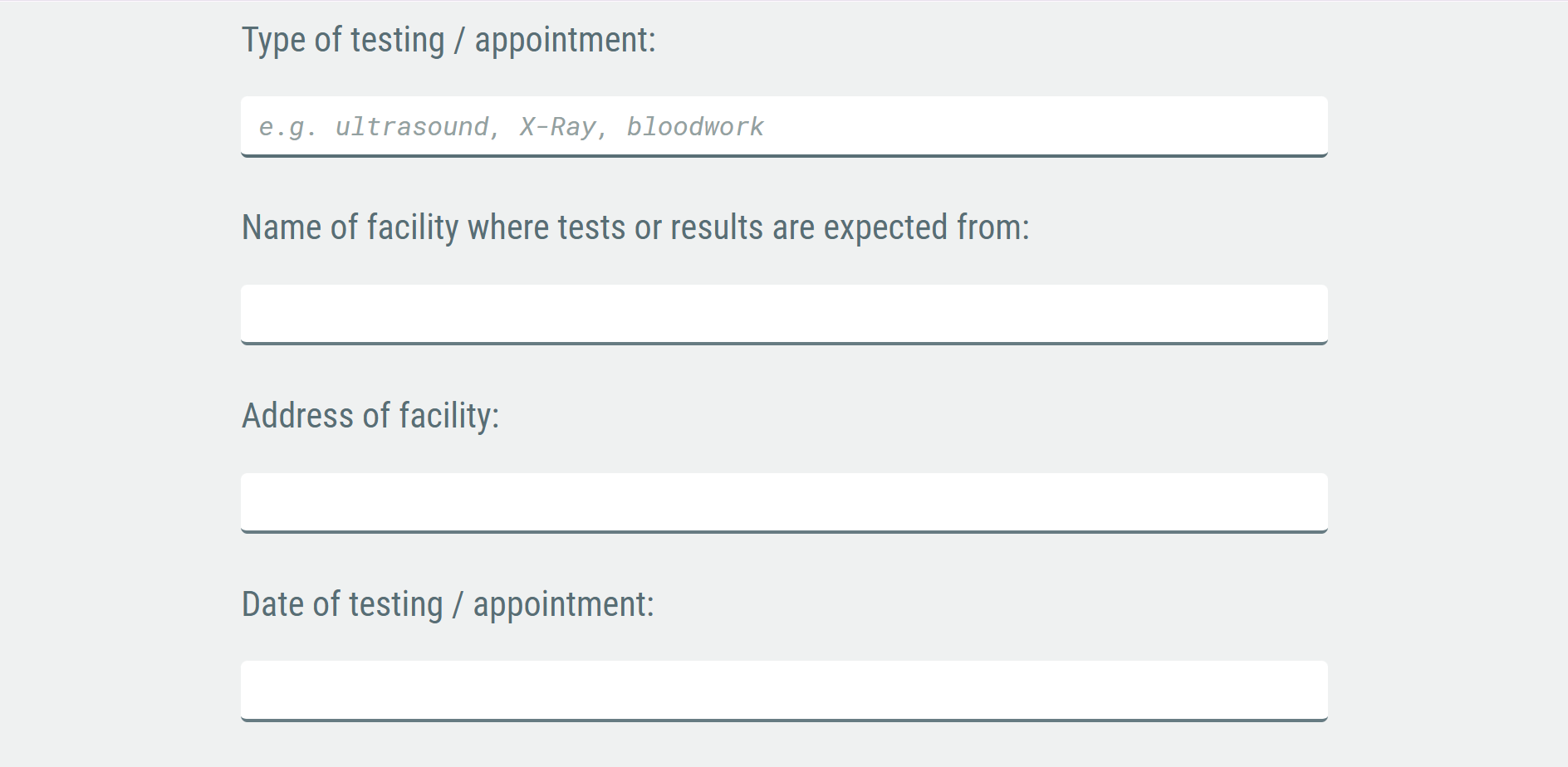
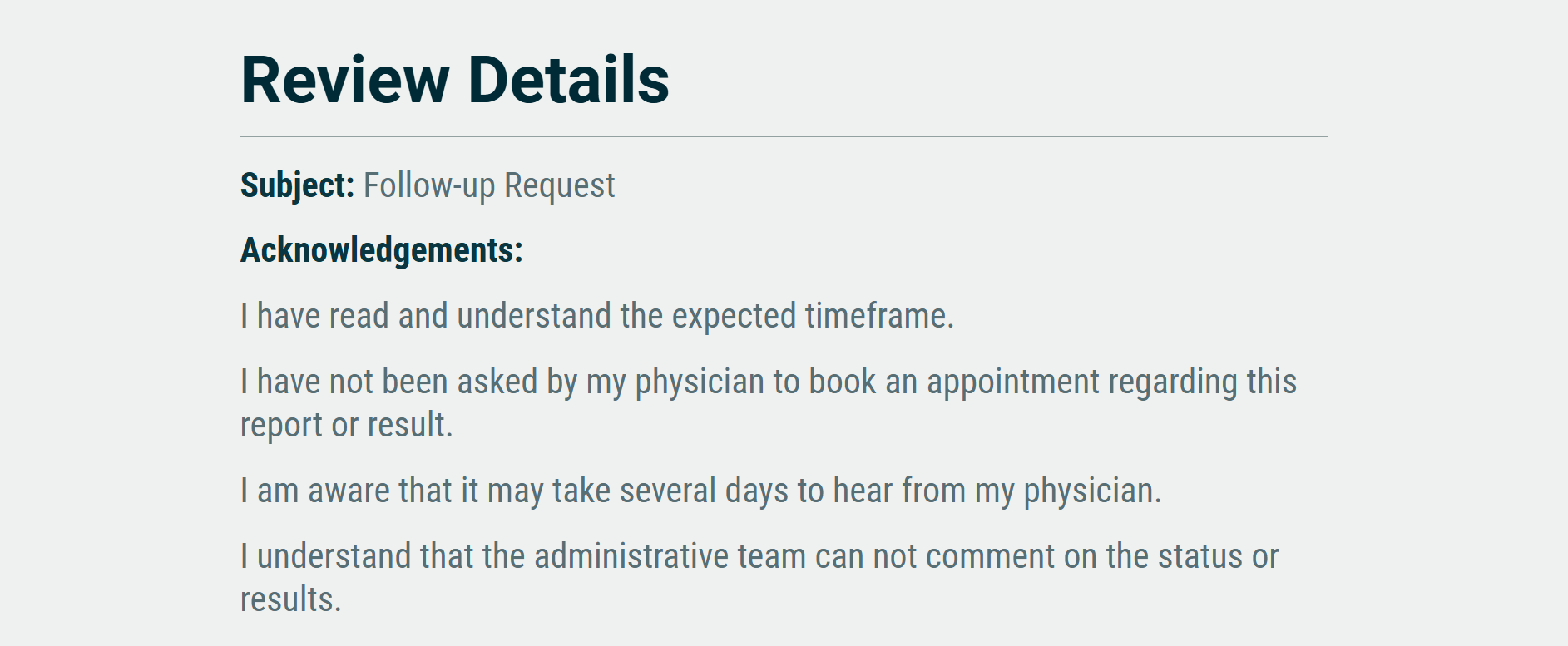
Go to the Magenta Health booking page.
Search for "results" to find the option "I want to… Request to be informed of a recent test result."
Select that option to open the available follow-up options.
Choose "I haven't heard from my physician about my report or result yet."
Confirm your email address when prompted.
Complete the follow-up request form with your information and submit it.
Your request will notify our administrative team that you're waiting for a result. The team can check whether we've received the report, help track down missing reports, and flag your follow-up request for your physician.
-
If you've checked the relevant portal and still can't find what you're looking for, you have options.
You can contact the organization that performed your test or the healthcare provider involved in your care. Depending on your situation, this might be:
The hospital where you received care
The laboratory where your testing was performed
The imaging centre where you had your scan
The physician or health-care provider who ordered the test
Your family physician or care team
You can request access to your own health information directly from the organization that holds it. This includes asking for a copy of your test results or other records related to your care. You don't necessarily have to wait for your family physician to get the information for you.
Under Ontario's health privacy law, you generally have the right to access your own health records. Depending on the organization and the type of information you're requesting, there may be a fee for providing copies of certain records.
If you're unsure who to contact, your health-care team may be able to help point you in the right direction.
-
Once you see your results, you might notice that some numbers or values are marked as "high," "low," "abnormal," or "out of range."
Try not to panic if you see a result highlighted in red. Although these labels can look concerning, they don't automatically mean something is wrong.
Laboratory reference ranges are generally based on values observed in a population, but everyone's body is different. A result that's slightly outside the range doesn't necessarily mean you have a medical condition, just as a result within the range doesn't always mean everything is fine.
Your results need to be considered alongside your symptoms, medical history, medications, previous test results, and other important information. Your physician can help you understand what your results mean in the context of your overall health and whether you need any follow-up.
If you have questions about your results, ask your healthcare provider. It's always okay to ask for clarification about what a result means and what you should do next.
-
One challenge patients face is that health information doesn't always move seamlessly between different parts of the healthcare system.
Although more health information is now available digitally, some records are still shared by fax. This can make communication between healthcare organizations more difficult, as information may need to be sent manually and doesn't always reach the right person or place when needed.
Your family physician may be trying to make decisions with incomplete information because a report hasn't reached them yet, another organization holds the relevant record, or they simply don't have access to the system where that information is stored.
This isn't necessarily a problem with one person or one clinic. It's a broader challenge created by the way health information is stored and shared across the healthcare system.
YOU CAN TAKE AN ACTIVE ROLE IN CLOSING THE LOOP
One of the most important things you can do is keep track of your own testing and follow up on your results.
If your doctor orders a test, make sure you know:
What test you're having
Where you're having it done
When you should expect the result
How you'll be able to access it
Whether you need to book a follow-up appointment
And if you don't see a result when you expect to, feel free to ask about it. You can contact the testing facility, check the appropriate patient portal, or reach out to your health-care team.
Following up doesn't mean you're responsible for navigating every broken connection in the health-care system. It means you're an important part of making sure information gets from the place where your test was performed to the people who need it — including you.
WE'RE WORKING TOWARD BETTER ACCESS TO HEALTH INFORMATION

At Magenta Health, we're actively working to improve how people access, share, and use health information to support patient care.
When patients can access their own health information and healthcare providers have what they need, it’s easier to make informed decisions and deliver connected care.
As part of our <Better Care/> work, we're continuing to improve our electronic medical record (EMR), invest in technology, and strengthen the systems and processes that support how information is managed and used across our clinics.
We want patients to be able to access their health information and understand how it relates to their care. We're continuing to improve the tools and processes that help make this possible.